Switching Billing Platforms: What Ontario Physicians Should Know
Thinking about switching your OHIP billing platform? Here's what to consider — from data migration to cost comparisons.

SnapBill Team
OHIP Billing Experts

Switching Billing Platforms: What You Should Know
Switching your OHIP billing platform feels daunting. You've got years of claims history, established workflows, and the nagging worry that something will break during the transition. But staying on an expensive or outdated platform has real costs too — costs that compound over an entire career.
Here's what to consider when evaluating a switch.
The Real Cost of Your Current Platform
Most physicians don't think about billing fees in annual terms. But they should.
At $400,000 in annual OHIP billings (roughly the Ontario average), here's what different platforms cost:
| Platform | Rate | Annual Cost |
|---|---|---|
| SnapBill Essentials | 0.2%, max $34.99/month | $419.88 |
| Self-serve platforms | 0.25%, or capped around $40/month | $480–$1,000 |
| Full-serve platforms | 1.95% | $7,800 |
| Traditional billing agent | 2.5% | $10,000 |
The difference between SnapBill Essentials and a 1.95% full-serve plan is about $7,380 per year. Even the like-for-like gap, SnapBill Premium at 1.5% against 1.95% full-serve, is $1,800 a year. Over a 30-year career, invested at a modest 7% return, that's over $170,000 in compounded savings.
What to Look for in a New Platform
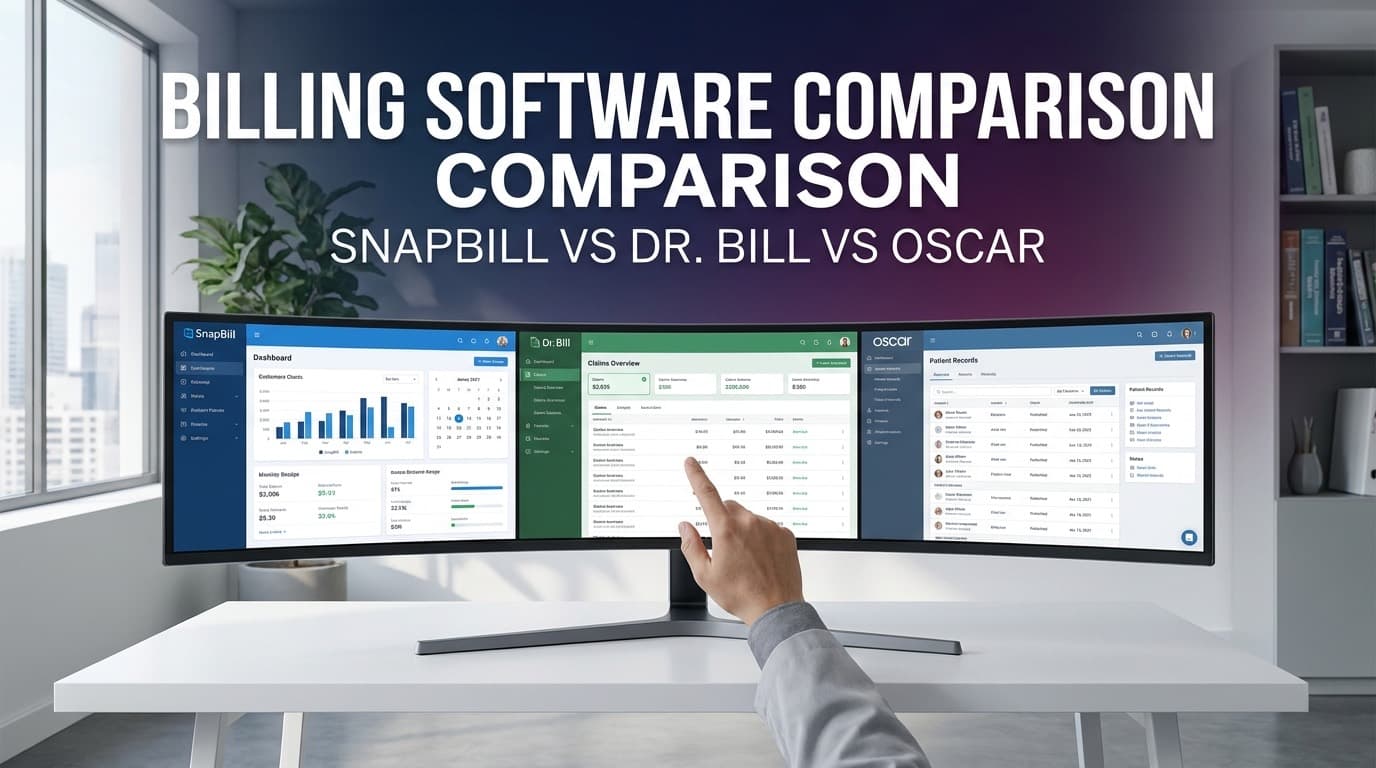
Not all billing platforms are created equal. If you haven't narrowed the field yet, start with our OHIP billing software comparison — it puts SnapBill, Dr. Bill and OSCAR side by side on rates, features and setup. Once you've picked a destination, here's what matters:
Accuracy
The cheapest platform is worthless if it doesn't catch errors. Look for pre-submission validation that catches common errors — health cards, fee code compatibility, and submission deadlines — before claims go out.
Speed
How long does it take to bill a full day? One-by-one entry is slow. Bulk processing and photo-based claim generation can cut billing time by 90%.
Reconciliation
Does the platform automatically match your Remittance Advice payments to submitted claims? Without this, you're doing manual reconciliation — or worse, not reconciling at all.
Independence
Who built the platform, and who does it answer to? A tool built by physicians starts from how billing actually works in a clinic. A bank subsidiary starts from somewhere else.
Migration Is Easier Than You Think
The most common reason physicians stay on an overpriced platform is inertia. But migration doesn't have to be painful:
- Your claims history stays with OHIP: All submitted claims are in the MCEDT system regardless of which platform you used to submit them
- Patient data is portable: Most platforms can export patient lists
- No downtime required: You can run both platforms in parallel during transition
- Pending claims aren't affected: Claims already submitted continue processing normally
The Independence Question
It's worth asking: who benefits when your billing platform charges more?
Some platforms are subsidiaries of major banks, and their pricing reflects a parent company's expectations rather than what the service costs to run. An independent platform built by physicians doesn't have that pressure on its rates.
Curious what you'd save by switching? Try SnapBill's savings calculator or sign up free to see the difference.
Ready to simplify your OHIP billing?
Join Ontario physicians who bill smarter with SnapBill. No setup fees, no monthly minimums.
Get Started Free